
Find Midland County Court Records
Midland County court records are held at the courthouse at 301 W. Main Street in Midland, where the 42nd Circuit Court, the 75th District Court, and the Probate Court all share the same building. You can search Midland County court records online through MiCOURT or go to the clerk's office in person for case files, certified copies, and full docket information. Civil, criminal, family law, and probate cases are all part of the public record, and most are open to anyone who makes a request.
Midland County Overview
Midland County Courts and Clerk
All three courts in Midland County operate from the same building at 301 W. Main Street in Midland. The 42nd Circuit Court is the county's highest trial court and handles felony criminal cases, civil suits over $25,000, family law matters including divorce and custody, and juvenile cases. Unlike many Michigan counties, the 42nd Circuit covers only Midland County, so all circuit-level matters stay local. The 75th District Court handles misdemeanors, traffic offenses, civil claims under $25,000, and small claims. The Probate Court manages wills, estates, guardianships, conservatorships, and mental health cases.
The County Clerk's office at 301 W. Main Street is the point of contact for records requests. You can reach the clerk at (989) 832-6739. The clerk processes document requests, issues certified copies, and keeps records for all three court divisions. Under MCL 15.232, Michigan public records must be open to any person who asks, and the clerk must respond to a written request within five business days. Requests can be made in person, by mail, or by phone for basic case information.
Michigan Court Rule 8.119 sets the statewide standards for how courts must keep records and handle public access. Midland County courts follow these rules, so the process here is consistent with other Michigan counties. If you want to search records before visiting, start with MiCOURT online, then contact the clerk's office if you need documents or certified copies. Having the case number or names of the parties ready will speed things up.
| 42nd Circuit Court | 301 W. Main St., Midland, MI 48640 | (989) 832-6711 |
|---|---|
| 75th District Court | 301 W. Main St., Midland, MI 48640 | (989) 832-6800 |
| Probate Court | 301 W. Main St., Midland, MI 48640 | (989) 832-6711 |
| County Clerk | (989) 832-6739 |
| County Website | co.midland.mi.us |
Search Midland County Court Records Online
The primary tool for searching Midland County court records online is MiCOURT, the statewide case search system run by the Michigan Supreme Court. MiCOURT lets you look up cases by name, case number, or date range. It covers the 42nd Circuit and 75th District courts in Midland County. You can view party names, case types, hearing dates, and docket entries without any fees or account login. It is the fastest way to check whether a case exists and what court is handling it.
MiCOURT does not always include every document in a case file. Full document sets, sealed filings, and older cases may require a direct request to the clerk's office at (989) 832-6739. The clerk can pull physical files and process requests for certified copies. The Michigan Courts website also has resources for navigating public record requests across the state, including guides on how to use MiCOURT and what types of records are available.
The county website at co.midland.mi.us has information on each court division, including hours, local contact numbers, and any forms or procedures specific to Midland County. Check there for updates on court closures or changes to local filing rules. If your case involves multiple counties, you may need to contact each county's clerk separately, as records are held locally in Michigan.

The Midland County website lists contact details and links to local court divisions, including the 42nd Circuit and 75th District courts.
What Midland County Court Records Contain
Court records in Midland County cover a broad range of case types. Circuit court files include felony criminal cases, civil suits over $25,000, family law matters such as divorce and child custody, and juvenile cases handled in the family division. District court files include misdemeanors, traffic violations, civil claims under $25,000, and small claims. Probate records cover estate files, wills, trusts, guardianship orders, and mental health commitments. The content of any individual file depends on what type of case it is and how far the case went in court.
A typical Midland County court file includes the initial complaint or petition, motions filed by both parties, court orders issued along the way, and the final judgment or disposition. Criminal files also contain the warrant, charging documents, plea agreements if applicable, and the sentencing order. Civil files show the complaint, proof that the defendant was served, and any final judgment or settlement. MCR 1.109 sets out the rules for how Michigan court documents must be formatted and filed, and Midland County courts follow those standards. Most documents in a closed case are public and can be requested by anyone.
Certain records are restricted by law. Juvenile cases, some mental health proceedings, and cases involving minor victims may be sealed or have portions withheld. A party can also ask the court to seal specific documents in an otherwise public case. If you are unsure whether a record is available, call the clerk at (989) 832-6739 before visiting. They can confirm what is open and what you need to bring or submit to make a request. Cases from before the mid-1990s will likely not appear in MiCOURT and require a direct request to the clerk.
Midland County Court Record Fees
Copies of court records in Midland County come with fees. Plain copies typically cost $1 to $2 per page. Certified copies, which carry the court's official seal and are required for many legal or official uses, cost more. Exact amounts depend on the court division and the current fee schedule. Call the clerk at (989) 832-6739 to confirm costs before you visit or send a mail request. Fees must be paid before the clerk releases copies.
If you cannot afford the fees, you may qualify for a waiver. Under MCL 600.880b, courts can waive filing fees and copy costs for people who are indigent. You fill out a waiver application and submit it with your request. A judge reviews the application and decides whether you qualify. The clerk's office at 301 W. Main Street can provide the form. This waiver can cover both filing fees and copy costs in the same case.
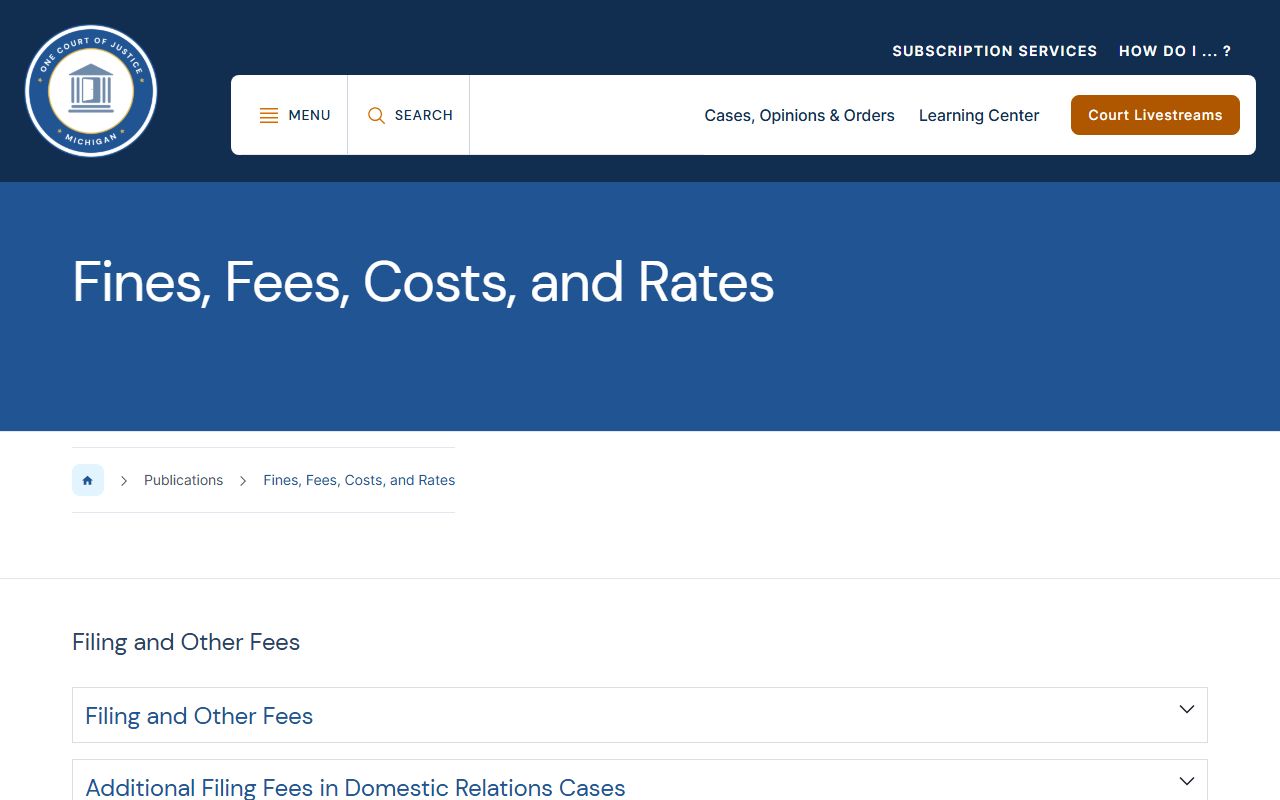
The Michigan Courts fee schedule page lists standard rates for copies and filings that apply statewide, including in Midland County courts.
Legal Help in Midland County
Midland County residents can find free legal guidance through Michigan Legal Help, a statewide online resource with plain-language articles on court records, divorce, child custody, small claims, and more. It also links to official court forms at no charge. It is the best starting point if you want to understand the process before deciding whether to hire an attorney.
Legal aid in Midland County is available through Mid-Michigan Legal Aid and similar regional programs. The State Bar of Michigan has a lawyer referral service for those who need a private attorney. Free court forms for most case types are at courts.michigan.gov/forms. The clerk's office at 301 W. Main Street can help you identify which forms you need for a specific case type, though they cannot give legal advice. Midland is home to several large employers and corporations, and cases involving business disputes follow the same circuit court process as any other civil matter.
Cities in Midland County
Midland County has no cities that meet the qualifying population threshold for dedicated pages on this site. The county seat is Midland, the largest city in the county and the location of all three courts at 301 W. Main Street. Other communities in the county include Coleman, Sanford, and Auburn. All residents of Midland County file their court cases at the Midland County courthouse.
Nearby Counties
These counties border or sit near Midland County. If you are unsure which county's courts have jurisdiction over your case, check where the key events happened or where you live.